

Automotive refinishing and OEM coating processes require high-performance pressure sensitive adhesive masking tape systems engineered to withstand thermal stress, solvent exposure, and mechanical tension during paint baking cycles. Manufactured with saturated crepe paper carriers and cross-linked rubber or acrylic adhesive matrices, specialized heat proof masking tape prevents paint bleed-through, edge lifting, and adhesive transfer on metal, plastic, and composite surfaces. Naikos formulates automotive masking systems with precise adhesion-to-steel metrics to maintain structural integrity across bake cycles ranging from 60°C to 200°C.
Technical Challenges in Automotive Spray Booth Operations
Automotive paint booths operate under strict thermal and chemical conditions during OEM coating and aftermarket refinishing. Standard paper tapes often suffer from adhesive degradation, backing embrittlement, or edge bleed under high-heat drying cycles.
Thermal Stress and Outgassing
During oven cure cycles, temperatures reach up to 150°C–200°C. Standard pressure-sensitive adhesives experience cross-linking failure or thermal plasticization, leading to ghosting or hard-to-clean residue on clear coats. Utilizing a specialized thermal masking tape ensures the adhesive matrix remains stable without outgassing or transferring onto cured automotive substrates.
Chemical and Solvent Penetration
Automotive coatings contain aggressive solvents, including xylene, toluene, and waterborne acrylic carriers. Inadequate backing saturation allows solvent migration through the carrier, softening the adhesive layer and causing edge bleed along critical color lines.
Conformability vs. Tensile Strength
Masking compound curves, door jambs, and bumper contours requires controlled elongation. Crepe paper carriers with balanced tensile strength prevent tearing during high-speed manual application while maintaining micro-conformability to prevent paint underspray.
Engineering Performance Specifications (NKS Series)
The table below outlines technical properties for Naikos high-temperature crepe paper masking tapes engineered for automotive refinishing lines:
| Property Item | Technical Specification |
| Model Code | NKS-###CMT |
| Color |
White, Yellow, Blue, Green, Red, Orange, Pink, Black |
| Carrier Material |
Crepe Paper |
| Adhesive |
Rubber / Acrylic Adhesive |
| Adhesion Level |
Low / Middle / High Tack |
| Temperature Resistance |
60°C / 80°C / 100°C / 120°C / 150°C / 200°C |
| UV Resistance |
14 to 60 Days |
| Roll Width |
1.5 mm to 1250 mm (0.06" to 49") |
| Roll Length |
1 m to 1800 m |
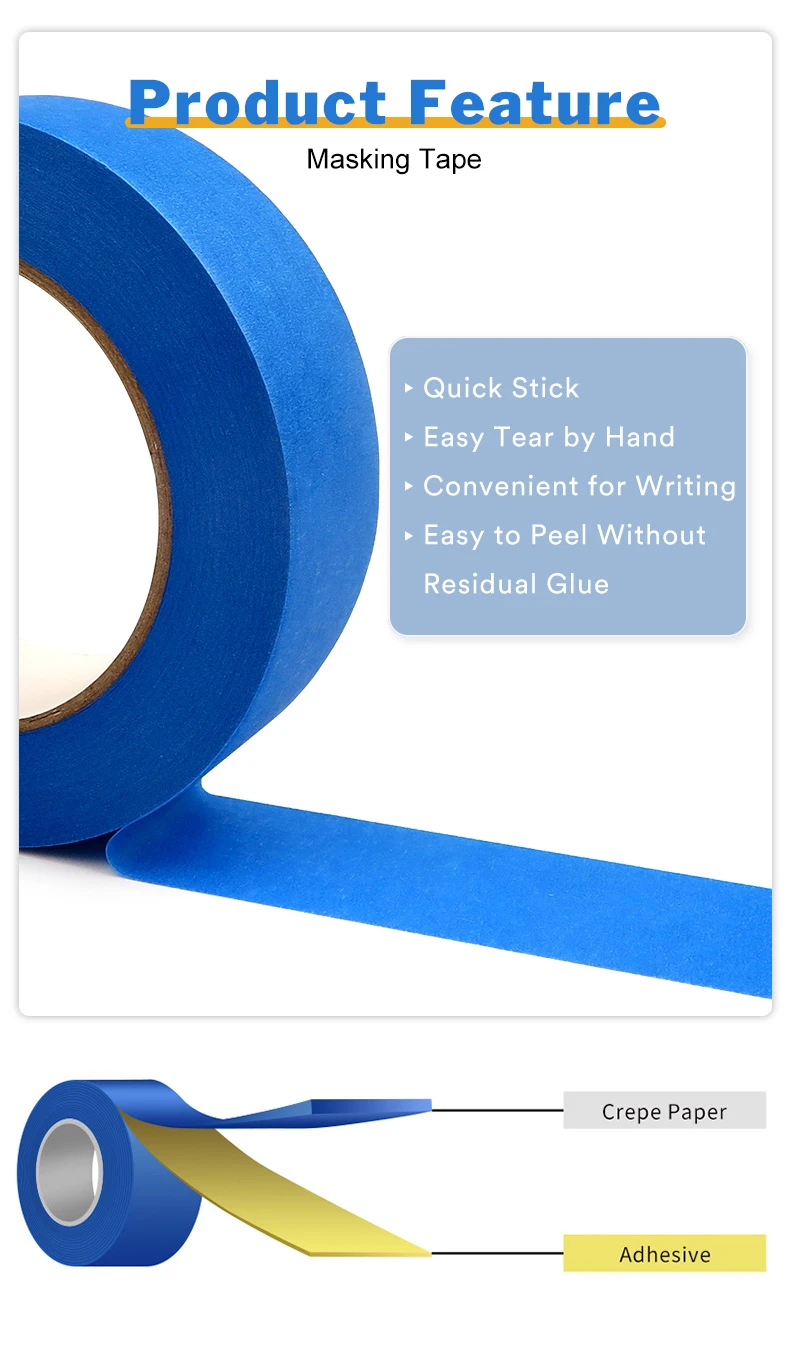
Carrier and Adhesive Formulations
Saturated Crepe Paper Carrier
Naikos utilizes a controlled-stretch crepe paper backing impregnated with synthetic latex. This treatment seals the cellulose fibers against solvent absorption and provides 14 to 60 days of outdoor UV resistance without backing disintegration. The paper yields a sharp paint line and tears cleanly by hand, reducing cycle time on high-volume assembly lines.
Precision Rubber & Acrylic Adhesives
Depending on thermal and chemical requirements, two main adhesive systems are utilized:
Solvent Rubber Systems: Provide rapid initial tack (Ball Test #14–#18) and strong adhesion to low-surface-energy (LSE) automotive plastics and electro-coated metals.
Thermosetting Acrylic Systems: Formulated for maximum temperature exposure up to 200°C. Highly resistant to oxidation, UV light, and extended heat exposure, guaranteeing zero adhesive transfer upon removal.
Application Scenarios across Automotive Manufacturing
OEM Electro-Coating and Bake Ovens
During body-in-white (BIW) coating, painters tape heat resistant formulations protect high-precision grounding points, threaded studs, and interior mating surfaces from e-coat deposition during high-temperature bake cycles.
Aftermarket Refinishing and Color Separation
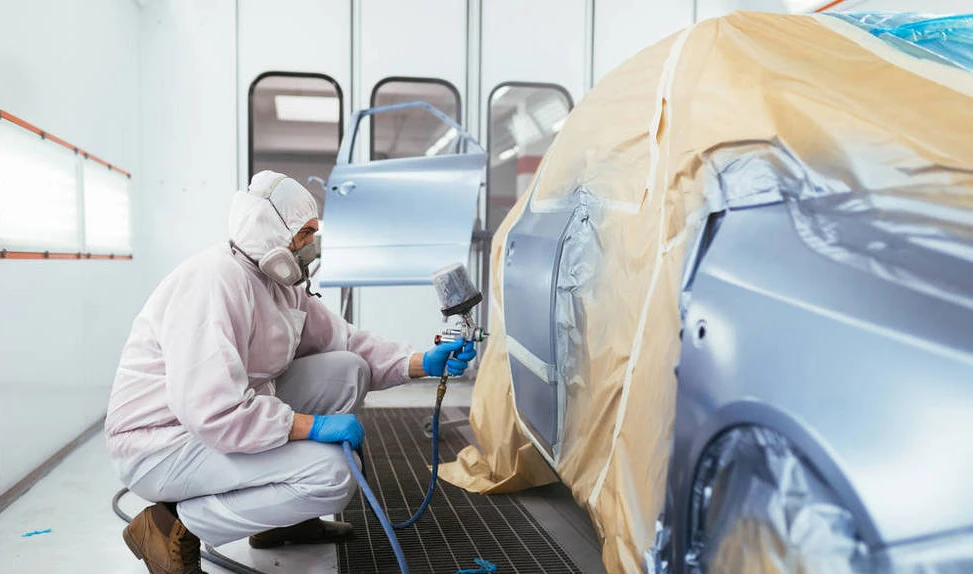
In repair shops, applying a strong adhesive masking tape along body panels prevents overspray under high-pressure spray guns. High-tack variants hold plastic sheeting and masking paper securely to vehicle bodywork without lifting at the edges.
Quality Control and Factory Converting Capabilities
As a direct masking tape industrial manufacturer, Naikos operates automated coating lines, precision slitting lathes, and die-cutting machinery.
Adhesion & Cohesion Testing: Every master jumbo roll undergoes 180° peel strength, rolling ball tack, and oven shear holding power testing before slitting.
Custom Converting Options: Log rolls up to 1250 mm wide are slit into custom widths down to 1.5 mm. Long-length spool rolls (up to 1800 meters) are available to minimize reel-change downtime in continuous automated masking operations.
Partnering with accredited masking tape companies provides global distributors and Tier-1 automotive suppliers with reliable, direct-factory adhesive solutions engineered to match rigid OEM performance specifications.
Frequently Asked Questions (FAQ)
Q1: What prevents this tape from leaving sticky residue on metal surfaces after high-temperature baking?
A1: Clean removal relies on cross-linked rubber adhesive technology paired with an anchor-coated paper primer. This chemical bond keeps the adhesive permanently attached to the crepe paper backing rather than transferring to the metal substrate when peeled at a 180-degree angle post-baking.
Q2: How does paper density affect the sharp edge performance of painter's tape?
A2: High-density saturated paper reduces microscopic voids between cellulosic fibers. When liquid paint strikes the tape boundary, dense paper prevents capillary action from pulling pigment underneath, ensuring razor-sharp paint lines without edge-bleed or solvent penetration.
Q3: Can this heat proof masking tape seal low surface energy (LSE) plastic trims alongside metallic vehicle panels?
A3: Yes. The balanced tack formulation achieves rapid surface tension wetting across both high-energy steel substrates and low-energy plastics like polypropylene (PP) or EPDM rubber trims. This high interfacial compliance allows the adhesive matrix to absorb differential thermal expansion between metal and plastic panels during baking cycles, preventing edge curling or lifting along tight curves or micro-gap formation at component joints and completely eliminating paint overspray ingress across multi-material composite assemblies.