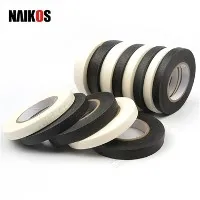
Synthetic rubber pressure-sensitive adhesives (hot-melt SBS/SIS block copolymers) deliver higher initial tack, superior anchorage to textured substrates, and optimized shear holding power compared to natural rubber or solvent acrylic formulations on PE-laminated woven carriers. This hybrid adhesive architecture achieves rapid surface wet-out under minimal application pressure while maintaining high internal cohesion across industrial bundling, pipe sealing, and carpet splicing operations.
Polymer Architecture and Rheological Behavior
The performance of heavy-duty single sided cloth tape depends on the rheological balance between its PE film-laminated fabric backing and the underlying elastomer mass. Synthetic rubber adhesives utilize styrene-butadiene-styrene (SBS) or styrene-isoprene-styrene (SIS) thermoplastic elastomers blended with hydrocarbon tackifying resins. This compound exhibits pronounced viscoelastic properties: under low-frequency contact, it flows like a viscous liquid to wet out substrate micro-roughness instantaneously.
Synthetic block copolymers are hot-melt processed, allowing precise control over molecular weight distribution and tackifier loading. This precision produces an aggressive initial tack (rolling ball tack under 100 mm) without compromising static shear resistance.
Interface Wet-Out and Cohesive Strength
Industrial job sites require a strong adhesive duct tape that bonds immediately to unrefined substrates, including concrete, oxidized metals, wood, and rough polyethylene sheeting. Synthetic rubber compounds possess low surface tension, allowing the adhesive mass to achieve full contact area without extensive dwell time or heavy roller pressure.
Synthetic rubber block copolymers incorporate hard polystyrene end-blocks that self-assemble into rigid physical domains within a soft mid-block matrix. These domains act as physical junction points, imparting high cohesive strength to prevent internal creep under continuous dead-weight shear loads or lateral tension during heavy carton bundling.
Moisture Endurance and Converting Precision
Heavy-duty cloth duct tapes encounter moisture, dust, and temperature variations in HVAC duct sealing and outdoor construction environments. The non-polar chemical backbone of synthetic rubber forms a hydrophobic barrier against water ingress. When laminated to a PE-coated cloth mesh, the synthetic mass seals exposed fabric edges, preventing moisture wick-through along the perimeter.
In high-volume industrial applications, log rolls must undergo slitting or die-cutting without adhesive bleed. The firm adhesive mass permits clean slitting down to custom widths without edge oozing, ensuring smooth roll unwinding during fast-paced assembly.
Choosing synthetic rubber pressure-sensitive adhesive formulations over traditional natural rubber or acrylic options ensures optimal initial tack and reliable shear holding power. For heavy-duty industrial applications, specifying PE-laminated synthetic rubber cloth duct tape provides engineers and procurement managers with a proven technical solution that balances mechanical performance, surface versatility, and consistent operational efficiency.