

Introduction
In modern industrial manufacturing-ranging from automotive trim attachment and consumer electronics to nameplate lamination-design engineers face a continuous dilemma: how to bond high surface energy (HSE) and low surface energy (LSE) substrates securely, efficiently, and cost-effectively without relying on traditional mechanical fasteners or messy liquid adhesives.
For decades, screws, rivets, and liquid glues were the standard. However, mechanical fasteners add weight, create stress concentration points, invite corrosion, and compromise aesthetics. Liquid adhesives require lengthy curing times, generate volatile organic compounds (VOCs), and often result in inconsistent bond lines.
Enter industrial double sided PET tape (also known as double coated polyester tape). Designed with a dimensionally stable polyethylene terephthalate carrier coated on both sides with high-performance acrylic adhesive, this pressure-sensitive adhesive (PSA) technology has revolutionized assembly lines worldwide.
Having spent 15 years evaluating adhesive formulations and supporting high-volume B2B manufacturing plants across North America, Europe, and Southeast Asia, I have seen firsthand how switching to premium PET adhesive tape solutions slashes labor cycle times while eliminating high-cost warranty claims caused by joint failure.
This comprehensive guide breaks down the science of surface energy, technical selection criteria, manufacturing trade-offs, and critical procurement pitfalls to help procurement managers and design engineers optimize their bonding processes.
The Surface Energy Challenge: Understanding HSE vs. LSE Bonding
To select the correct PET film tape, engineering and procurement teams must first understand the fundamental physics of adhesion: surface energy, measured in dynes per centimeter (dyne/cm or mN/m).
- High Surface Energy (HSE) Substrates (> 38 dynes/cm): Metals such as stainless steel and aluminum, as well as engineering plastics like ABS, Polycarbonate (PC), and Acrylic (PMMA), possess high surface energy. Liquid adhesives and PSA tapes easily "wet out" (spread across) these surfaces, establishing maximum molecular contact and exceptionally high peel adhesion (>= 15 N/25mm / 63.5 oz/inch).
- Low Surface Energy (LSE) Substrates (< 36 dynes/cm): Polyolefins such as Polypropylene (PP), Polyethylene (HDPE/LDPE), and TPO are widely used in automotive interior parts and electronic housings due to their low cost and high impact resistance. However, their low surface energy causes standard adhesives to bead up like water on a freshly waxed car, leading to premature delamination under shear stress or temperature fluctuations.
The Double-Sided PET Tape Solution
Engineered double sided polyester tape formulations solve this problem by incorporating modified acrylic adhesive chemistry. The high-tack acrylic layer flows rapidly into the micro-microscopic valleys of LSE plastics, delivering immediate usability right after assembly while maintaining structural shear stability across thermal cycles from 80°C to 150°C (176°F to 302°F).
Technical Specifications & Construction
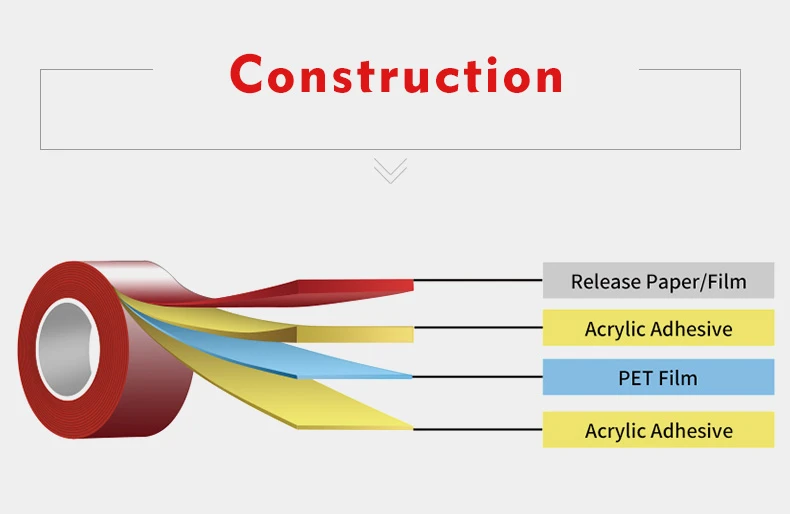
A high-performance high temperature PET tape consists of a double-sided self-adhesive structure featuring a PET carrier, high-tack acrylic adhesive layers, and a protective release paper or film liner.
Technical Parameter Matrix
| Item | Double Sided PET Film Tape |
| Color |
Clear (Multi Colors Available) |
| Carrier |
PET Film |
| Adhesive |
Acrylic Adhesive |
| Total Thickness |
0.01~0.205 mm (0.39~8 mil) |
| Adhesion to Stainless Steel |
>= 15 N/25mm (63.5 oz/inch) |
| Holding Power |
> 24 Hr |
| Temperature Resistance |
80~150°C (176~302°F) |
| Width |
2~1020/1240 mm (Customized Width Available) |
| Length |
50/100/500/1000 m (Customized Length Available) |
Key Industrial Applications
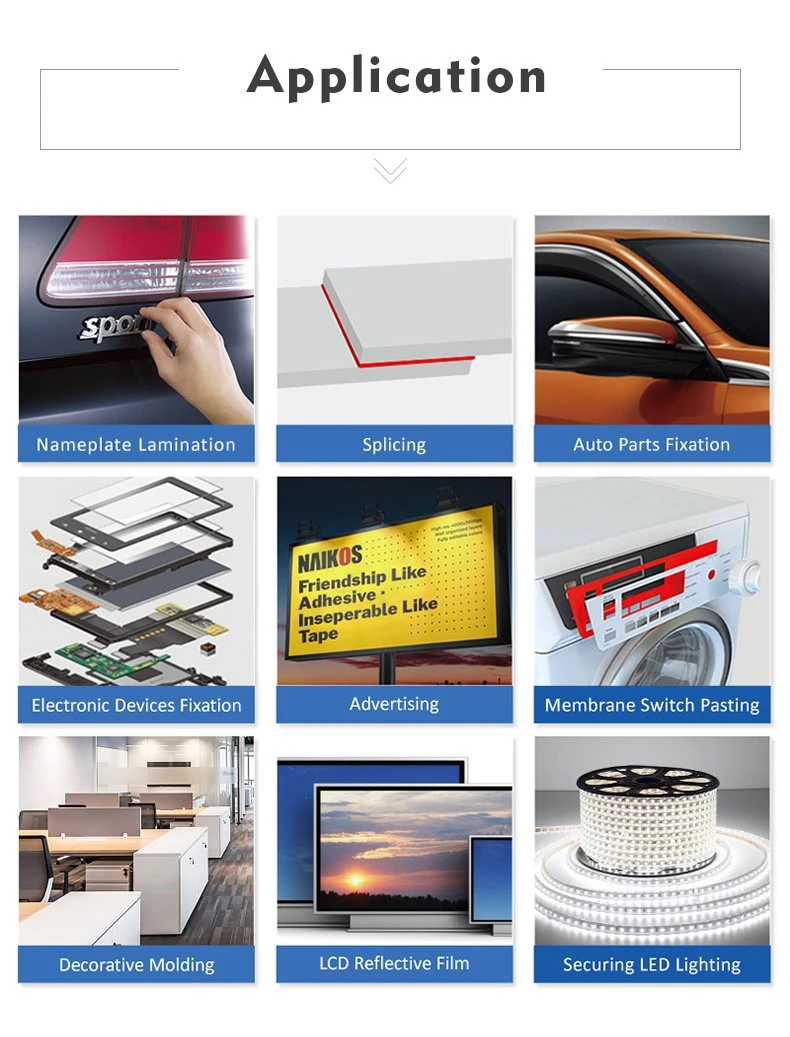
The dimensional rigidity and clean die-cutting performance of double sided PET tape make it essential across multiple advanced manufacturing sectors:
- Automotive Exterior & Interior Attachment: Used for ABS plastic side moldings, emblems, interior fascia trims, and mirror housings. Automotive plastics (ABS, PP, EPDM) experience expansion and contraction due to ambient temperature changes. Double coated polyester tape absorbs differential thermal stress while preventing trim detachment under high-speed wind shear.
- Consumer Electronics & Optical Display Assembly: Applied in smartphone lens mounting, LCD reflective film splicing, touch-screen bezels, and EV battery pack insulation. Ultra-thin PET film (0.01~0.05 mm) maintains tight gap tolerances, prevents light leakage around screen perimeters, and allows clean rework during factory assembly without leaving residue.
- Industrial Nameplates & Membrane Switches: Designed for stainless steel rating plates, polycarbonate control panels, and graphic overlays. Smooth PET liners eliminate telegraphing (orange-peel texture showing through thin overlays), while high shear holding power (> 24 hours) ensures metal nameplates remain anchored indefinitely.
15-Year Insider Guide: 4 Common Selection Mistakes & Quality Pitfalls
Over 15 years in international tape trade, I have seen overseas buyers lose tens of thousands of dollars on assembly line failures due to minor selection oversights. Here is how to avoid the most common traps:
Trap #1: Confusing "High Initial Tack" with "Long-Term Shear Strength"
A cheap, soft rubber-based adhesive may feel extremely sticky to a thumb test (high initial tack). However, under sustained static loads or elevated ambient temperatures (> 50°C), rubber adhesives suffer from chemical oxidation and shear slip, leading to complete bond breakdown. Always specify solvent or modified acrylic formulations with verified static shear test data (> 24 hours per PSTC-107 or pressure-sensitive tape standards).
Trap #2: Ignoring Surface Preparation (The 50% Failure Factor)
Even the finest high temperature PET tape will fail if applied over oil films, mold release agents, or dust particles.
Rule of Thumb: Always mandate a 50:50 Isopropyl Alcohol (IPA) and water wipe-down before lamination.
For Ultra-Hard LSE Plastics: Apply a dedicated surface primer to boost dyne levels prior to tape application.
Trap #3: Buying the Wrong Release Liner for Automated Production
If your plant uses automated pick-and-place robots or high-speed rotary die-cutting machines, ordering standard 90g yellow glassine paper release liners can lead to liner tearing during high-tension stripping.
Pro Tip: Specify a 0.05 mm PET release film liner for high-speed automated equipment. PET film liners feature high tensile strength, uniform release force, and zero dust generation, making them ideal for cleanroom environments.
Trap #4: Falling for Off-Spec "B-Grade" Master Roll Imports
Brokers often offer discounted log rolls originating from uncalibrated coater runs. These rolls suffer from adhesive thickness variations across the web (e.g., 0.15 mm on the edge vs. 0.11 mm in the center). This variation causes uneven die-cut pressure and localized delamination. Always insist on batch-specific Certificate of Analysis (COA) documents covering coating weight and total thickness tolerance.
Sourcing & Procurement Recommendations for Global Buyers
When negotiating bulk purchasing agreements with Chinese or global adhesive tape manufacturers, follow these three guidelines to secure optimal pricing and technical compliance:
- Request Log Rolls (1020 mm / 1240 mm x 1000 m) If You Own Slitting Equipment: Buying master log rolls reduces square-meter material costs compared to precut finished rolls while giving converters flexibility to fulfill custom-width orders.
- Audit Factory Coating Infrastructure: Verify whether your supplier operates coating lines with inline thickness monitoring and cleanroom environments. This infrastructure is critical for optical-grade electronic tapes.
- Mandate Complete Regulatory Certification: Ensure your supplier provides up-to-date RoHS and REACH compliance documentation for seamless customs clearance in Europe and North America.
Frequently Asked Questions (FAQ)
Q1: What makes double-sided PET tape superior to non-woven tissue tape for plastic bonding?
A: Double sided PET tape features a solid, dimensionally stable polyester film core. Unlike non-woven tissue tapes-which tear easily, absorb moisture, and have fiber-edge fraying-PET tape provides superior tensile strength, precise thickness uniformity (0.01~0.205 mm), clean rotary die-cutting, and higher temperature resistance up to 150°C.
Q2: Can PET adhesive tape bond low surface energy (LSE) plastics like Polypropylene (PP) and Polyethylene (PE) without primers?
A: Yes. High-grade PET adhesive tape formulated with modified acrylic adhesives is specifically engineered to wet out low surface energy plastics. While primers can further enhance bond strength on extreme fluoropolymers or silicone-blended plastics, modified acrylic PET tape establishes structural peel adhesion (>= 15 N/25mm) directly on standard PP, PE, and ABS substrates.
Q3: How do you guarantee lot-to-lot adhesive stability for large-volume OEM orders?
A: Every production batch undergoes strict QA lab testing under PSTC and FINAT standards. We test and record 180° peel adhesion, static shear holding power (> 24 hours), initial tack, and total thickness tolerances. A complete Certificate of Analysis (COA) and material batch samples are archived and shipped with every order.
Partner with a Trusted Industrial Adhesive Tape Manufacturer
Eliminate mechanical fasteners, lower assembly costs, and upgrade your product reliability with factory-direct double sided PET tape solutions.
Whether you require jumbo log rolls for conversion, custom micro-slit rolls, or precision die-cut gaskets, our engineering team is ready to support your technical specifications.
Fill out our online inquiry form today to receive a customized quote.


