Table Of Contents
- 1. Featured Product Recommendation
- 2. Industry Pain Points: Why Standard Foam Tapes Fail
- 3. Technical Specifications & Core Construction Mechanics
- 4. Deep Dive: Gap Filling & Surface Conformability Insights
- 5. Product Selection Standards & Grid Layout
- 6. Application Matrix & Industry Use Cases
- 7. Common Misconceptions and Quality Procurement Traps
- 8. Frequently Asked Questions (FAQ)
In industrial manufacturing, automotive assembly, and architectural installations, permanent bonding failures are costly. Discover how engineered double sided polyethylene tape and double coated polyethylene foam tape solve high-stress joining challenges.
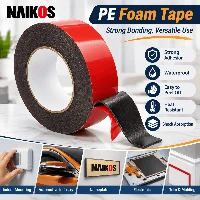
Super Strong Double Sided Acrylic PE Foam Tape
2. Industry Pain Points: Why Standard Foam Tapes Fail
Procurement specialists and project engineers frequently encounter premature bonding failures when sourcing generic mounting materials. Understanding these field failures prevents catastrophic warranty claims.
- Cohesive Failure Under Constant Shear Stress: Many commercial tapes utilize low-molecular-weight adhesive masses that creep under continuous static loads. When applied vertically-such as in double sided foam mounting tape automotive applications or architectural wall panel installations-the adhesive layer undergoes continuous internal slippage.
- Environmental Degradation and UV Embrittlement: Standard carrier foams lack adequate UV stabilizers or antioxidant packages. Under prolonged solar radiation and thermal cycling, the PE foam backing oxidizes and cracks.
- Surface Energy Mismatch: Bonding to low-surface-energy (LSE) plastics or textured substrates often results in poor initial "wet-out," allowing moisture and chemical vapors to migrate along the interface.
3. Technical Specifications & Core Construction Mechanics
To achieve high ultimate adhesion (>= 15 N/25mm to stainless steel) and a holding power exceeding 24 hours under static load, structural integrity begins at the molecular level. Naikos double coated polyethylene foam tape relies on a precisely engineered multi-layer architecture:
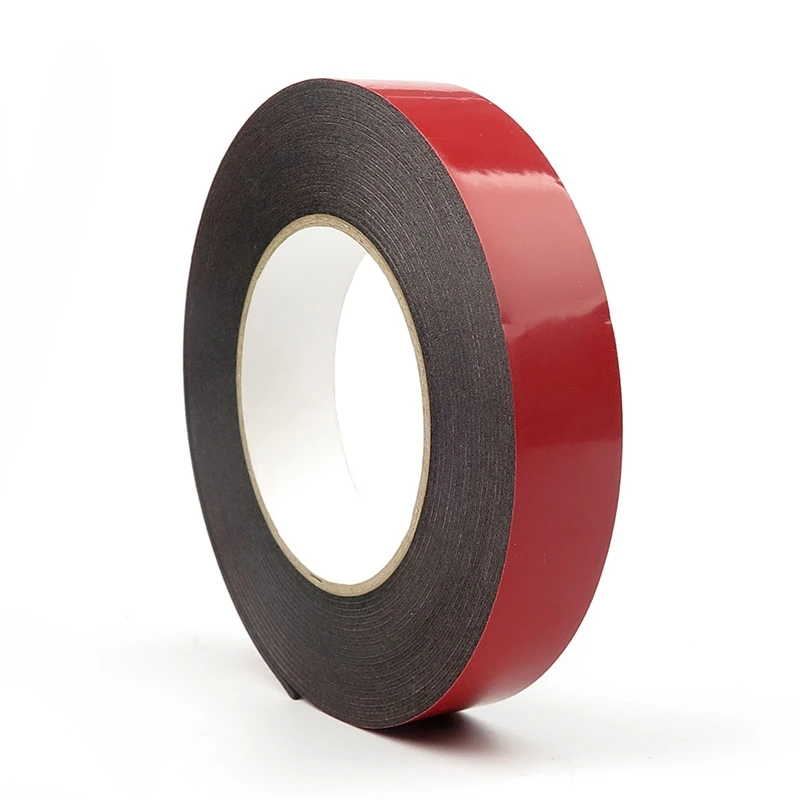
- Release Film / Paper: Designed for smooth, consistent manual peeling or automated high-speed dispensing without tearing.
- High-Performance Acrylic Adhesive System: A cross-linked unique acrylic adhesive mass coated on both sides, optimized for shear resistance.
- Conformable PE Foam Carrier: Bridges gaps on irregular surfaces while providing shock absorption and water/dust sealing.
| Technical Parameter | Specification Standard |
|---|---|
| Carrier Material | Conformable PE Foam |
| Adhesive System | Cross-linked Acrylic Adhesive |
| Total Thickness Range | 0.2 mm to 3.0 mm (8 to 120 mil) |
| Adhesion to Stainless Steel | >= 15 N/25 mm (>= 53 oz/inch) |
| Holding Power (Static Shear) | > 24 Hours |
| Temperature Resistance | -20°C to +120°C (-68°F to +248°F) |
4. Deep Dive: Gap Filling & Surface Conformability Insights
When bonding textured or irregular surfaces, tape conformability is just as critical as initial tack. For a detailed breakdown of how cellular structures manage stress distribution, read our specialized guide on What Makes PE Foam Tape Ideal for Gap Filling.

Figure: High molecular ductility and flexibility ensure seamless adaptation to irregular surfaces.
5. Product Selection Standards
Specifying the correct double sided polyethylene tape requires evaluating thickness, adhesive rheology, and closed-cell integrity. Thin profiles (0.2–0.8 mm) suit precision electronics, while thick profiles (1.0–3.0 mm) absorb mechanical tolerances on rough walls and automotive trims.
6. Application Matrix & Industry Use Cases
- Automotive Industry: Side moldings, emblems, wheel weights, and interior trim fixing.
- Furniture Industry: Mirror mounting, decorative trim, and panel assembly.
- Electronics & Appliances: Display bezel bonding, vibration dampening, and dust sealing.
- Signage & Nameplates: Architectural signage and metal/plastic nameplates.
7. Common Misconceptions and Quality Procurement Traps
- Ignoring Density Specifications: Low-density foam compresses permanently under minor loads, destroying the bond line.
- Confusing Initial Tack with Ultimate Shear Strength: High initial stickiness does not guarantee long-term static holding power under continuous load.
- Overlooking Liner Release Consistency: Inconsistent release force on automated dispensing lines causes frequent line stoppages.
8. Frequently Asked Questions (FAQ)
Q1: What makes Naikos PE foam tape suitable for both indoor and outdoor weathering conditions?
A: Our formulation combines a resilient, closed-cell PE foam backing with a cross-linked acrylic adhesive system. This provides exceptional resistance to UV radiation, moisture, and wide temperature fluctuations (-20°C to +120°C) without yellowing or losing bond strength.
Q2: Can this double sided polyethylene tape replace mechanical fasteners like rivets or screws?
A: Yes. For lightweight to medium-load structural bonding, high-shear acrylic foam tape distributes stress evenly across the entire bonded area, eliminating stress concentration points and preventing galvanic corrosion on metals.
Q3: What is the Minimum Order Quantity (MOQ) for custom-slit widths and log lengths?
A: As a direct manufacturer, Naikos supports flexible customization. We offer custom widths ranging from 4 mm to 1030 mm and customized roll lengths to match your precise application requirements.
Q4: How does Naikos ensure consistent quality control for bulk export orders?
A: Every production batch undergoes rigorous laboratory testing, including peel adhesion tests on stainless steel (>= 15 N/25mm), static shear holding power tests (> 24 hours), and thickness caliper measurements.
Ready to Secure Your Applications with Proven Industrial Adhesives?
Partner with an experienced manufacturer dedicated to precision engineering, strict quality control, and reliable global supply chain execution.
Contact Now / Request Free Sample