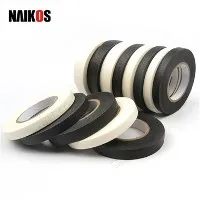
Selecting the proper crepe masking tape for large-scale industrial projects or commercial distribution is rarely as simple as picking a standard roll off the shelf. Whether you are an importer managing regional supply chains, a project contractor overseeing multi-site finishing, or a procurement manager sourcing for automated OEM lines, surface compatibility failures can quickly turn into expensive operational disasters.
A tape that performs flawlessly on smooth architectural glass may strip delicate lacquer off hardwood trim or leave stubborn adhesive residue when exposed to high-temperature baking ovens. In industrial manufacturing and professional painting, understanding surface dynamics and adhesive chemistry is the difference between seamless production and costly rework.
The Hidden Costs of Using the Wrong Masking Tape on Industrial Job Sites
When a masking application fails, the cost is rarely limited to the price of the tape roll itself. The true expense lies in labor hours, material downtime, and customer claims.
Why Common Surface Failures Occur
Surface failures typically stem from a mismatch between the surface energy of the substrate, the adhesive system, and the physical characteristics of the paper backing.
- Paint Bleed and Edge Curling: Occurs when the paper carrier lacks proper saturation or flexural elongation. Liquid paint seeps under the tape edge, ruining sharp color separation lines.
- Surface Tearing and Delamination: Happens when high-tack adhesives bond too aggressively to delicate coatings, pulling off wood veneers, drywall paper, or cured paint films upon removal.
- Adhesive Transfer and Residue: Caused by thermal degradation or UV breakdown. When standard rubber adhesives are exposed to high temperatures or direct sunlight beyond their rated limit, the chemical bond breaks, leaving a tacky film on the substrate.
Real-World Case: Cost Analysis of Surface Cleanup and Paint Rework
Consider a commercial auto refinishing facility processing 50 vehicle bodies per day. If an unverified masking tape leaves adhesive residue across window seals and metal frames due to oven heat, manual cleanup requires an average of 45 minutes per vehicle.
At an industry labor rate of $35 per hour, this oversight costs $26.25 per unit in wasted labor alone. Across a monthly production cycle, adhesive failure on the shop floor can result in over $30,000 in unexpected operational losses-dwarfing any initial savings gained from purchasing low-grade tape.
Understanding Crepe Paper Masking Tape Engineering and Adhesion Levels
To select the correct product grade, buyers must look closely at how crepe paper masking tape manufacturer specifications align with physical substrate characteristics.
Anomaly of Surface Energy: How Rough, Smooth, and Coated Substrates React
Surface energy (measured in dynes/cm) dictates how well an adhesive spreads and wets out over a substrate:
High Surface Energy (HSE): Materials like uncoated metal and smooth architectural glass allow adhesives to wet out easily, requiring controlled peel adhesion to prevent permanent bonding.
Low Surface Energy (LSE): Materials like powder-coated metals, textured plastics, and plaster require a strong adhesive masking tape with high initial tack to establish immediate surface contact.
Carrier Thickness, Saturation Levels, and Crepe Elongation Ratios
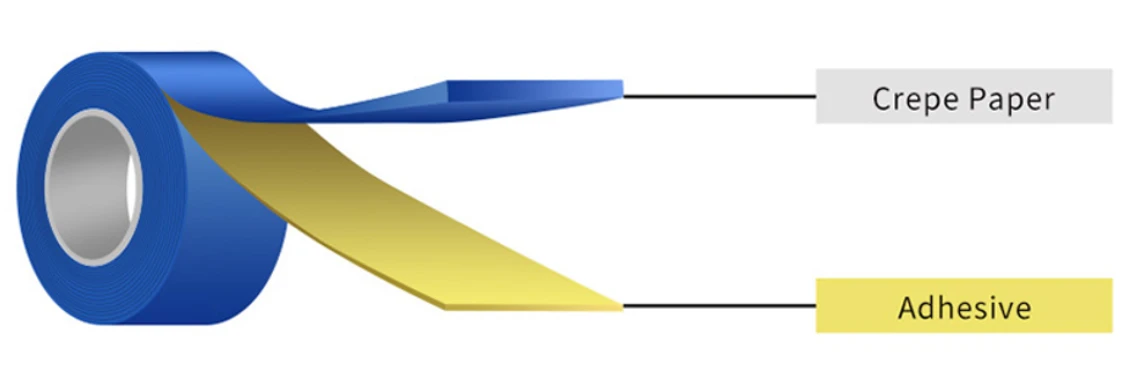
The paper backing of a sticky masking tape is not ordinary paper. It undergoes a specialized saturation process using latex or synthetic resins to impart solvent resistance, tensile strength, and flexural crepe elongation. A higher crepe ratio allows the tape to stretch around tight curves without tearing or edge-lifting.
Factory Physical Properties Specification Matrix
The table below outlines our official factory technical parameters for the NKS-###CMT series:
| Item / Property | NKS-###CMT Specification |
| Color Options | White, Yellow, Blue, Green, Red, Orange, Pink, Black, etc. |
| Carrier / Backing | Crepe Paper |
| Adhesive Chemistry | Rubber Adhesive / Acrylic Adhesive |
| Adhesion Level | Low / Middle / High |
| Temperature Resistance | 60°C / 80°C / 100°C / 120°C / 150°C / 200°C |
| Width Range | 1.5–1250 mm (0.06–49 inch) (Customized Width Available) |
| Length Range | 1–1800 m (Customized Length Available) |
Surface-by-Surface Selection Guide for Industrial Buyers and Contractors
Matching the right masking tape industrial grade to specific job site substrates ensures maximum efficiency and flawless surface protection
.
Textured Walls and Drywall: Balancing High Tack with Clean Stripping
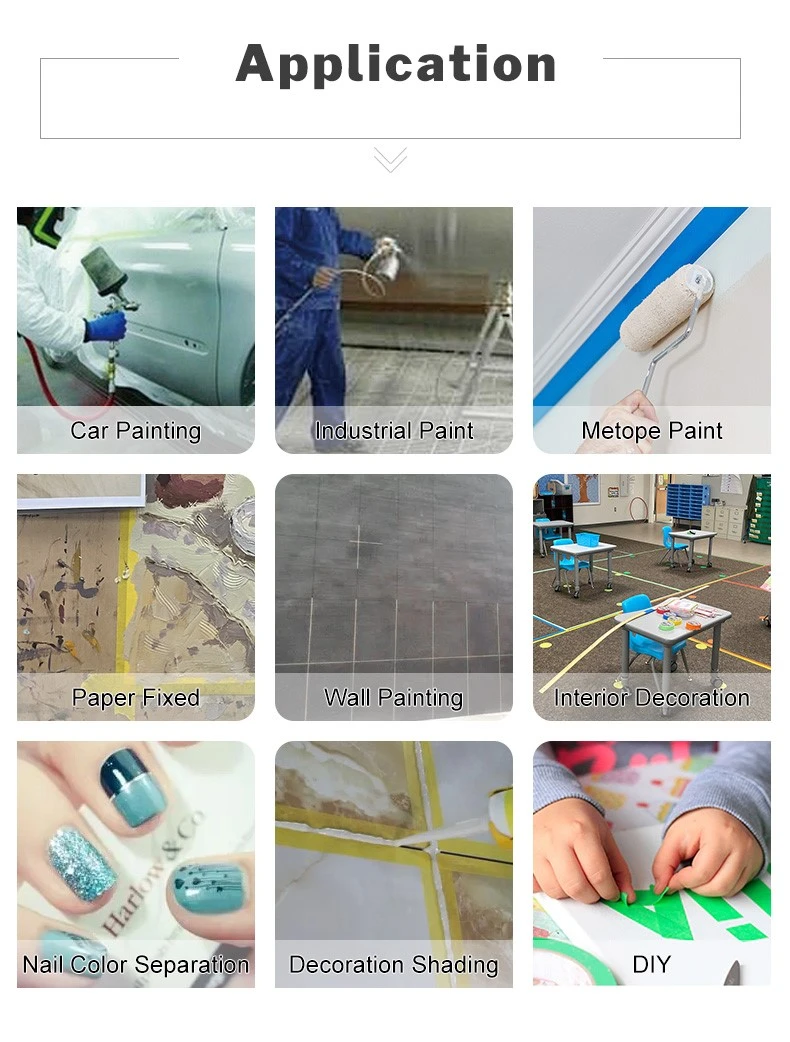
Textured plaster, drywall, and interior metope paint present uneven surface profiles. Standard low-tack tapes fail to seal microscopic valleys, leading to paint bleed underneath.
Recommended Choice: A flexible crepe masking tape with medium-to-high tack natural rubber adhesive. The supple backing conforms into surface texture while the quick-stick adhesive locks down edges instantly.
Smooth Glass and Glazed Architectural Panels: Preventing UV Degradation and Ghosting
Glass panels and glazed window extrusions are non-porous and frequently exposed to direct sunlight during building construction. Standard rubber adhesives degrade under solar radiation, leaving sticky ghosting marks or baking onto the glass.
Recommended Choice: A painters tape heat resistant or UV-stabilized acrylic formula rated for 14 to 60 days of outdoor exposure. Acrylic adhesive systems maintain chemical stability under UV light, allowing clean one-piece removal without leaving ghosting film behind.
Hardwood, Lacquered Furniture, and Veneers: Protecting Finishes from Edge Bleed
Polished hardwood, varnished cabinets, and decorative wood veneers are sensitive to mechanical surface peeling. Using a high-tack tape risks pulling off delicate polyurethane or nitrocellulose topcoats.
Recommended Choice: A low-to-medium tack crepe tape engineered specifically for delicate surfaces. It offers controlled adhesion that seals tight against solvent bleed while stripping cleanly without lifting wood fibers or topcoats.
Industrial Metals and Coated Structures: High-Temperature Performance in Curing Ovens
Automotive body lines, sheet metal fabrication, and machinery manufacturing involve high-heat baking cycles after liquid painting or powder coating.
Recommended Choice: A specialized thermal masking tape or heat-proof crepe grade. Designed to withstand continuous oven temperatures from 120°C up to 200°C, these tapes utilize cross-linked adhesive chemistry to ensure sharp separation lines and residue-free removal after cooling.
Adhesive Formulations: Natural Rubber vs. Solvent Acrylic Systems
Understanding adhesive chemistry is essential when evaluating proposals from masking tape companies. The two primary adhesive systems used on crepe paper backings serve very different operational environments.
Natural Rubber Systems: Maximum Initial Quick Stick for Construction Environments
Natural rubber adhesives are formulated by blending natural elastomer resins with tackifiers.
- Key Strengths: Exceptional quick tack, immediate bonding to low-energy surfaces, and excellent shear holding power at room temperature.
- Best Applications: Indoor wall painting, paper fixing, light bundling, and short-term surface protection.
- Limitations: Susceptible to long-term UV degradation and thermal oxidation if exposed beyond rated limits.
Solvent Acrylic Systems: Extended Outdoor UV Stability (14 to 60 Days)
Solvent acrylic adhesives are synthesized polymers designed for high environmental resistance.
- Key Strengths: Outstanding resistance to ultraviolet rays, moisture, thermal fluctuations, and chemical solvents. Does not yellow or harden over time.
- Best Applications: Outdoor architectural masking, window frame protection during construction, and long-duration indoor projects.
- Limitations: Lower initial quick tack compared to rubber, requiring moderate hand pressure during application to achieve full surface wetting.
Avoiding Common Quality Traps When Sourcing Bulk Masking Tape Overseas
Importing bulk adhesive tape requires rigorous supplier vetting to avoid receiving sub-standard consignments. Below are three frequent quality traps encountered in international procurement:
Trap 1: Inconsistent Coating Weight and Edge Curling in Storage
Importers often receive tape rolls that look perfect upon arrival but begin curling at the edges after a few weeks in local warehousing. This is caused by uneven adhesive coat weights or improper tension control during jumbo roll coating and rewinding. Request batch coating tolerance data from your wholesale masking tape supplier before issuing large purchase orders.
Trap 2: Poor Tensile Elongation Leading to Snap Failures During Removal
If a factory uses low-grade raw paper without adequate latex saturation, the finished tape will exhibit brittle tensile behavior. When workers attempt to peel the tape off large surface areas, it snaps into small paper fragments, forcing workers to scrape off pieces manually. Always verify elongation at break metrics (minimum 8–12% for industrial grades).
Trap 3: Unverified Heat Resistance Ratings in High-Bake Oven Operations
Some suppliers mark general-purpose tapes as heat-resistant without conducting standardized thermal oven trials. When used in automotive baking lines, unverified adhesives melt into surface pores. Ensure your industrial masking tape factory provides certified temperature exposure test reports.
Key Technical and Compliance Standards for International Procurement
Reliable B2B tape manufacturers maintain strict quality assurance protocols to guarantee batch-to-batch consistency.
Essential Quality Control Tests
Prior to dispatch, every production lot should undergo standardized testing according to global industry methods:
- 180-Degree Peel Adhesion Test (PSTC-101 / ASTM D3330): Measures the force required to remove tape from a standard stainless steel plate at a 180-degree angle.
- Rolling Ball Initial Tack Test (PSTC-6): Evaluates how quickly the adhesive captures a moving steel ball, indicating instant bonding ability.
- Holding Power / Shear Resistance Test (PSTC-107): Measures the adhesive's resistance to slipping under static vertical load at elevated temperatures.
- Thermal Aging and UV Resistance Test: Simulates extended sunlight and heat exposure to verify residue-free removal limits.
Environmental Certifications and Global Export Compliance
For seamless customs clearance in Western markets, verify that your supplier provides:
ISO 9001:2015: Guarantees systematic manufacturing process controls and quality management.
RoHS Compliance: Ensures the tape contains no hazardous heavy metals (lead, mercury, cadmium).
REACH Certification: Verifies compliance with European Union chemical safety regulations, confirming the product is free from Substances of Very High Concern (SVHC).
Supply Chain Strategies for Wholesalers, Distributors, and Converters
Ordering Custom Log Rolls (1250 mm Width) vs. Finished Slit Widths
Regional tape converters with local slitting equipment often import master jumbo logs (1250 mm full width by 1000m+ length). Purchasing jumbo logs lowers sea freight costs per square meter and allows flexible local slitting based on immediate customer demand.
Conversely, distributors serving retail or contractor channels should order finished slit widths (e.g., 18 mm, 24 mm, 36 mm, 48 mm) packaged in branded shrink wraps.
Spool Winding Options (Up to 1800 m Lengths) for Automated Application Lines
For industrial OEM customers operating continuous automated application machinery, standard 50-meter rolls require frequent machine stops for roll changes. Leading manufacturers produce continuous spool-wound rolls (reaching lengths up to 1800 meters). Spool winding dramatically reduces downtime on high-speed manufacturing lines.
Private Label OEM Packaging and Transit Protection Standards
Building local brand value requires factory-supported OEM customization:
- Custom Inner Cores: Printed company logo and website on the inside 3-inch paper or plastic core.
- Retail & Bulk Packaging: Individual shrink wrapping with branded color labels, barcoding, and heavy-duty outer display cartons.
- Ocean Transit Protection: Full palletization with corner protectors, stretch wrapping, and desiccant bags inside containers to prevent core crushing or moisture absorption during transit.
Frequently Asked Questions (FAQ)
1. What causes crepe masking tape to leave sticky residue after high-temperature baking cycles?
Adhesive residue occurs when the operating temperature or oven exposure duration exceeds the thermal stability limit of the adhesive formulation. Standard rubber adhesives degrade under high heat, causing cohesive failure where the adhesive splits and remains on the surface. Utilizing a dedicated heat proof masking tape engineered with cross-linked rubber or solvent acrylic systems ensures the adhesive maintains structural integrity up to 120°C–200°C, stripping cleanly off metal and glass after cooling.
2. How long can industrial painters tape heat resistant series be exposed to outdoor sunlight without backing failure?
Standard indoor masking tapes tear and leave residue after less than 24 to 48 hours of outdoor sun exposure due to UV degradation of the paper and rubber. However, specialized outdoor painters tape heat resistant series formulated with UV-stabilized acrylic adhesives and saturated paper backings can remain in direct outdoor sunlight for 14 to 60 days. They remove in one continuous piece without baking onto window frames, glass, or exterior cladding.
3. Can a wholesale masking tape supplier provide custom roll widths and private label printed inner cores?
Yes. Direct factory suppliers offer comprehensive OEM converting services. Slitting widths can be customized from 1.5 mm micro-slits up to 1250 mm full-width logs with tight tolerances (±0.2 mm). Importers can also specify custom roll lengths (from 10 meters to 1800-meter continuous spool rolls), customized 3-inch inner paper core logo printing, and full-color retail shrink-wrap packaging.
4. What quality assurance documentation should importers request before issuing a bulk purchase order?
Before finalizing a commercial contract, importers should request a complete Technical Data Sheet (TDS) detailing peel adhesion, tensile strength, elongation, and temperature resistance metrics. Additionally, ask for a Material Safety Data Sheet (MSDS), factory ISO 9001 certification, and third-party RoHS and REACH compliance reports to ensure the products meet environmental safety regulations in destination markets.
Request Factory Direct Quotes & Free Sample Rolls for Evaluation
Navigating industrial tape selection requires direct communication with experienced manufacturing engineers. As a direct crepe paper masking tape manufacturer, Naikos provides full OEM converting, custom slitting, and certified quality testing across global markets.
Contact our technical sales department today to request comprehensive Product Data Sheets, OEM pricing schedules, or free sample rolls for laboratory and shop-floor trials.
Submit your inquiry now to receive a detailed wholesale quotation within 24 hours!