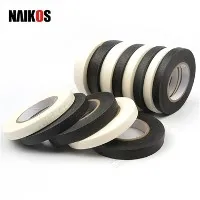
Material Structure and Adhesive Performance of Washi Tape
The performance of washi tape depends on the interaction between the paper backing, adhesive formulation, and coating process. Unlike standard masking tapes using conventional crepe paper, washi tape uses a finer fiber paper structure that provides better surface contact and improved conformability during application.
The washi paper backing offers flexibility while maintaining sufficient tensile strength for handling and removal. This allows the tape to follow curved surfaces, sharp edges, and irregular profiles without easily tearing during application.
The adhesive system generally uses acrylic pressure-sensitive adhesive, which is designed to achieve a balance between Initial Tack, holding force, and clean removal performance. For precision masking, excessive adhesion may cause adhesive transfer or surface damage, while insufficient bonding may result in paint bleeding. A properly formulated acrylic adhesive layer helps maintain stable bonding during the masking process and supports clean removal after use.
Precision Masking Performance in Industrial Applications
For professional painting applications, edge definition and residue control are important factors when selecting masking materials. washi painters tape is widely used because the thin paper backing can closely follow the substrate surface, reducing gaps where paint may penetrate.
During automotive refinishing, furniture coating, and decorative painting processes, the tape needs to maintain stable contact while allowing easy removal after coating. Performance evaluation usually includes 180° Peel Strength testing, adhesive residue inspection, and surface compatibility analysis.
Compared with general masking tapes, washi masking tape provides improved flexibility for applications where straight paint lines, curved masking areas, and delicate surfaces are required.
Applications of Washi Tape in Different Industries
Washi tape is commonly applied in automotive painting, construction finishing, furniture manufacturing, and industrial surface protection.
In automotive applications, it is used for paint separation, trim masking, and temporary surface protection. The flexible paper carrier helps operators apply the tape around vehicle curves and complex areas while maintaining clean coating boundaries.
In construction and interior decoration, washi tape is used for wall painting, renovation projects, and protective masking. Low adhesive transfer performance helps reduce additional cleaning work after removal.
For selected industrial assembly processes, washi tape can also provide temporary fixing and protection functions where lightweight bonding and clean removal are required.
Washi paper masking tape provides controlled adhesion, clean removal performance, and consistent production quality for precision masking applications.